IT Staffing Tips

Staff Augmentation vs Dedicated Teams: Which Model is Right for Your Business?

AllDomainSoft Team 7 min readMarch 10, 2026
Staff Augmentation vs Dedicated Teams: Which Model is Right for Your Business?

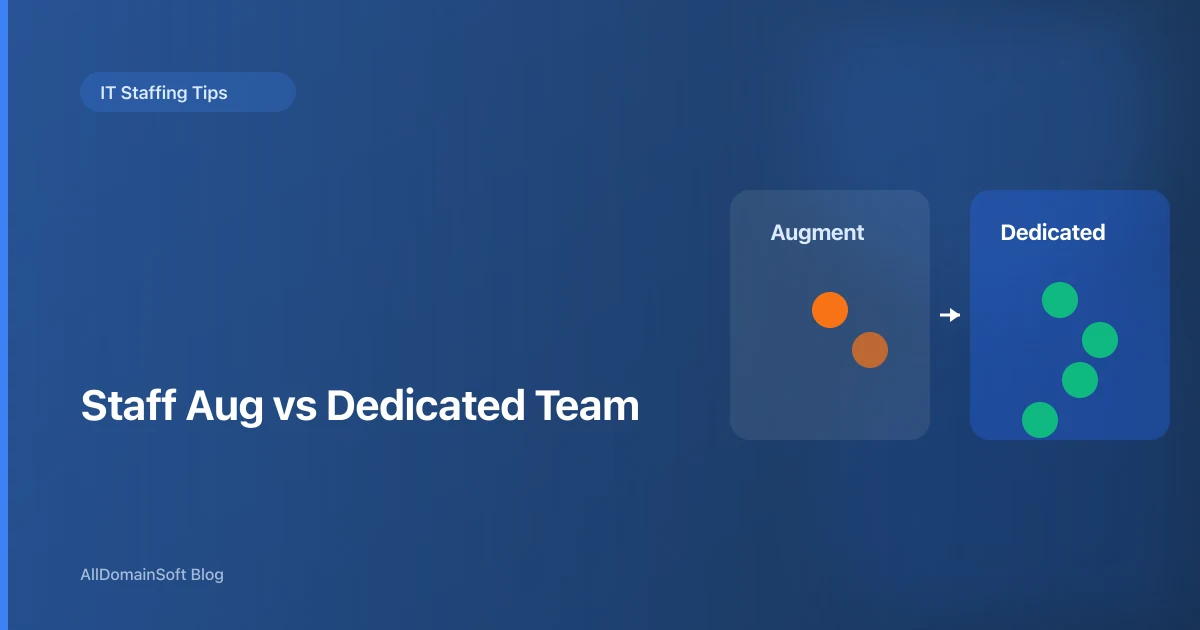
Two of the most common engagement models in IT staffing are staff augmentation and dedicated teams. While they may seem similar, the differences in cost structure, management overhead, and long-term value are significant.

Staff Augmentation

Staff augmentation is the practice of adding external developers to your existing team on a temporary basis. It's ideal for short-term projects, specific skill gaps, or seasonal workload spikes.

Pros: Flexible scaling, quick onboarding, you retain full management control Cons: Higher per-person cost long-term, integration overhead, potential knowledge loss when contractors leave

Dedicated Teams

A dedicated team model provides you with a fully managed team that works exclusively on your project. The staffing partner handles hiring, retention, infrastructure, and HR.

Pros: Lower cost at scale, higher retention, deeper domain knowledge over time, reduced management burden Cons: Requires minimum commitment (usually 3+ months), less flexibility for very short engagements

Our Recommendation

For projects lasting 3+ months with ongoing development needs, dedicated teams offer significantly better value. AllDomainSoft specialises in this model — we build, house, and manage your team so you can focus on your product.
Questions people have after reading the blog

When does "Staff Augmentation vs Dedicated Teams: Which Model is Right for Your Business?" actually make sense for a business?

When you have recurring roadmap work, clear ownership on your side, and enough process to keep quality and communication predictable.

How do I pick between freelancers, agency projects, and dedicated teams?

Freelancers fit short spikes, agencies fit fixed scopes, and dedicated teams fit multi-quarter product delivery.

What should I ask in the first vendor call?

Ask about interview-before-hire, replacement policy, security controls, IP terms, and delivery ownership.

How quickly can a team start without compromising quality?

Shortlisting can happen in days, but sustainable quality depends on onboarding clarity, tooling access, and early sprint discipline.

What is the biggest red flag?

Vague answers on ownership, quality checks, and replacement terms. Good partners are explicit about these from day one.

AT

AllDomainSoft Team

Content Team

The AllDomainSoft content team shares insights on IT staffing, remote team management, and technology trends to help businesses scale smarter.